
Blog
How to Choose the Right Face Serum for Your Skin Type

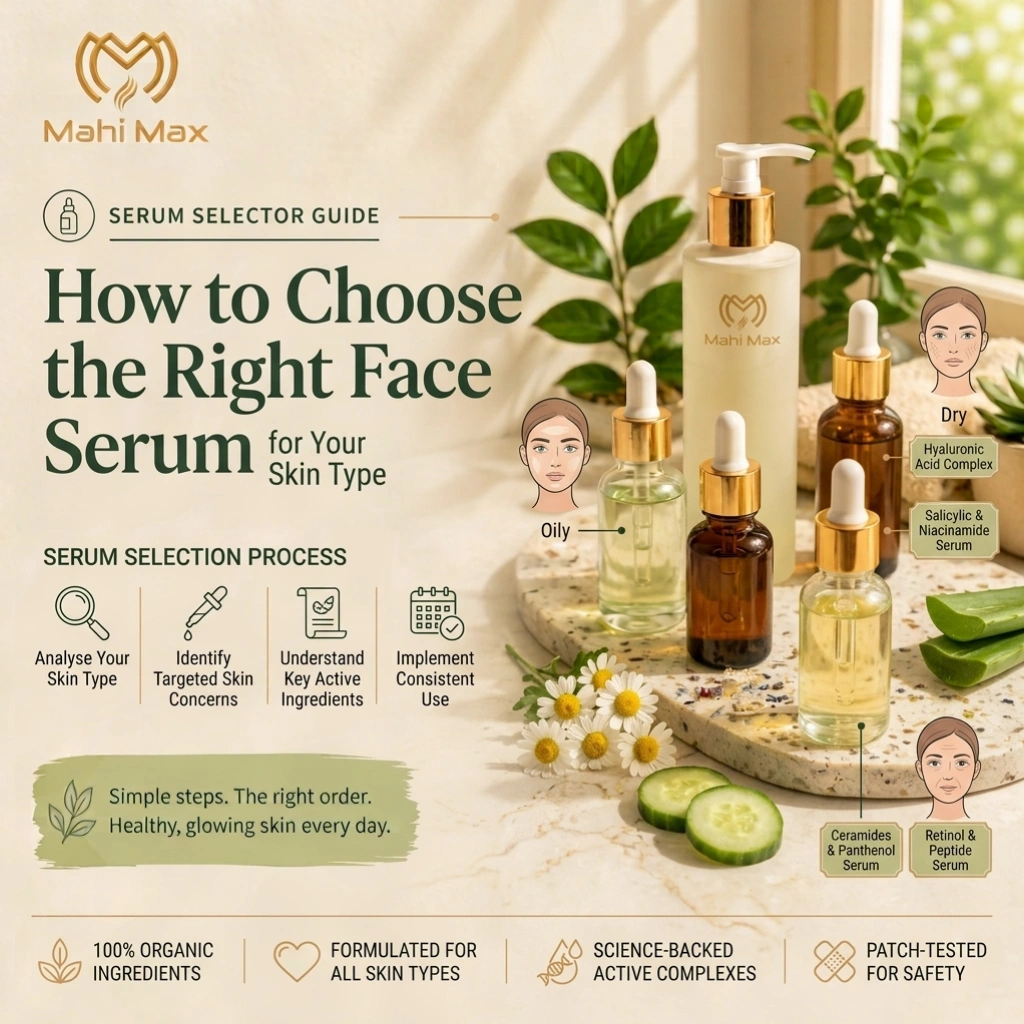
Skincare shelves are full of serums promising glow, hydration, or younger looking skin. Most of that is marketing. The real answer is simpler: the best face serum is the one formulated for your specific skin type and concern. Buying based on packaging or trends usually means wasted money, and sometimes irritated skin.
This guide covers how to identify your skin type, match it to the right serum, and understand the key ingredients so you can shop with confidence. If you already have a cleanser and moisturizer in place, this fits naturally into an existing skincare routine as the next step up.
What Is a Face Serum
A face serum is a lightweight, fast absorbing skincare product with a higher concentration of active ingredients than a regular moisturizer or cream. Because the formula is concentrated, a small amount goes a long way, and results usually build gradually with consistent use rather than overnight.
A serum is a targeted step in your routine, not a replacement for cleansing, moisturizing, or sun protection. It works on a specific concern, such as hydration, dullness, uneven tone, or visible signs of aging, while the rest of your moisturizer and sunscreen routine handles overall skin health.
Step 1: Identify Your Skin Type
Before choosing a serum, get an honest read on your skin. Wash your face with a gentle cleanser, wait about 30 minutes without applying anything, then check how it looks and feels.
- Dry skin. Feels tight, may show flaking or rough patches, rarely looks shiny.
- Oily skin. Appears shiny all over, especially by midday, and may be prone to enlarged pores or breakouts.
- Combination skin. Oily through the T-zone (forehead, nose, chin) but normal to dry on the cheeks.
- Normal skin. Balanced, not noticeably oily or dry, with few sensitivity issues.
- Sensitive skin. Reacts easily to new products with redness, stinging, or itching.
Your skin type, combined with your main concern such as dullness, dryness, dark spots, or fine lines, determines which serum is actually worth using. A serum that works well for a friend with oily skin may do very little for skin that's dry or sensitive, so it helps to shop by type first and marketing claims second.
Step 2: Match a Serum to Your Skin Type
Best Face Serum for Dry Skin
Dry or dehydrated skin benefits most from a serum built around hydration. Look for humectant ingredients like hyaluronic acid and glycerin, which draw moisture into the skin and help it feel plumper and more comfortable over time. The Exfoliating and Hydrating Face Serum can be layered under your moisturizer to add extra hydration without feeling heavy on the skin.
Dry skin can also be sensitive to over-exfoliation, so pay attention to how often you use products with active exfoliants alongside a hydrating serum, and scale back if your skin starts to feel tight or reactive.
Best Face Serum for Oily and Combination Skin
If your skin leans oily, you don't need to skip serums. You need a lightweight, non greasy formula that won't add to shine or clog pores. Niacinamide is a good option here, since it's known for helping balance the look of oiliness while supporting a more even skin tone.
The Niacinamide Face Serum is formulated with niacinamide and zinc, and works well as a daily step for oily and combination skin, particularly through the warmer months when skin tends to produce more oil.
Best Face Serum for Dullness and Uneven Tone
Dull, tired looking skin often responds well to brightening, antioxidant rich formulas. Vitamin C is one of the most researched ingredients for this concern. According to the Cleveland Clinic, topical vitamin C has antioxidant effects that can help reduce visible cell damage and support better looking skin with regular use.
The Vitamin C Face Serum is formulated with Sodium Ascorbyl Phosphate along with hyaluronic acid and ceramides, which makes it suitable for a brightening morning routine without feeling drying.
For more targeted concerns like dark spots and patches left behind by sun exposure or breakouts, the Skin Whitening Face Serum is designed to support a more even looking complexion with consistent, ongoing use.
Best Face Serum for Fine Lines and Aging Concerns
Visible fine lines, loss of firmness, and changes in skin texture are common as skin matures, and they tend to respond best to consistent, long-term care rather than a single product change. Retinol remains one of the most studied ingredients for this concern.
The Retinol Hydrating Face Serum is formulated with 2.5% retinol and 2% alpha arbutin, pairing an anti-aging active with hydrating support so skin doesn't feel stripped or overly dry after use.
If you're new to retinol, ease in slowly, starting with two to three nights a week, and always follow with sunscreen the next morning, since retinol can increase sun sensitivity and make skin more prone to irritation from UV exposure.
Best Face Serum for General Skin Health
Not every serum needs to target a dramatic concern. Some people simply want a well-rounded daily step that supports overall skin condition without focusing on one narrow issue. The Vitamin B Complex Face Serum is built around hydration and collagen support, making it a solid everyday option for people who want healthier looking skin as a long-term habit rather than a quick fix.
Key Serum Ingredients to Know
| Ingredient | Best For | Typical Time of Use |
|---|---|---|
| Hyaluronic Acid | Dryness, dehydration | Morning and night |
| Niacinamide | Oiliness, uneven tone, pores | Morning or night |
| Vitamin C | Dullness, antioxidant protection | Morning |
| Retinol | Fine lines, texture, aging | Night only |
| Alpha Arbutin | Dark spots, pigmentation | Morning or night |
A general rule dermatologists at the American Academy of Dermatology point to is applying vitamin C in the morning before sunscreen, and saving stronger actives like retinol for your nighttime routine, since it isn't photostable and can make skin more sun sensitive during the day.
How to Layer a Serum Into Your Routine
Getting the order right matters as much as picking the right product, and it's one of the most common places people go wrong when adding a new serum to an existing routine.
A simple structure to follow:
- Cleanse. Remove dirt, oil, and product buildup so the serum can absorb properly.
- Serum. Apply to slightly damp skin so it absorbs efficiently rather than sitting on the surface.
- Moisturizer. Seal in the serum and add a protective barrier over it.
- Sunscreen (AM only). Always the last step in your morning routine, applied over everything else.
If you're still building out your full routine and aren't sure what changes between day and night, our guide on morning vs night skincare routines walks through how each step, including serum, shifts between AM and PM.
How to Shop for a Serum Without Overspending
It's easy to assume a higher price automatically means a better formula, but that isn't always true. When comparing options, focus on three things: the active ingredient and its concentration, how well the formula matches your skin type, and whether the packaging protects the product from light and air, since ingredients like vitamin C break down faster when exposed to both.
It also helps to buy one serum at a time rather than stocking up on several actives at once. This makes it easier to tell which product is actually working, and easier to spot irritation early if your skin reacts to something new.
Common Serum Mistakes to Avoid
- Using too many actives at once. Mixing high concentrations of vitamin C, retinol, and exfoliating acids in the same routine can overwhelm your skin barrier. Introduce one new active at a time.
- Skipping the patch test. Concentrated formulas carry a higher risk of irritation if your skin is sensitive. Test on your inner arm or jawline first, and wait 24 hours before applying to your face.
- Expecting overnight results. Most serums need four to eight weeks of consistent use before visible changes appear.
- Applying serum over sunscreen. Always apply serum before your moisturizer and sunscreen, not after, so the active ingredients can absorb properly.
- Ignoring your actual skin type. A serum built for oily skin will not necessarily help dry skin, even if the labeled concern matches.
Frequently Asked Questions
How do I know which face serum is right for me?
Start by identifying your skin type, whether that's dry, oily, combination, or sensitive, then choose a serum formulated around your main concern: hydration, oiliness, dullness, dark spots, or fine lines.
Can I use more than one serum in my routine?
Yes, but introduce one at a time and pay attention to how your skin responds. A common combination is a hydrating serum in the evening and a vitamin C serum in the morning.
How long does it take to see results from a face serum?
Most people notice visible changes after four to eight weeks of consistent, daily use. Results depend on the formula, your skin type, and how consistently you use sun protection alongside it.
Is a face serum necessary in a skincare routine?
It's not mandatory, but a well matched serum can provide more targeted care than a cleanser and moisturizer alone, particularly for specific concerns like dullness or visible aging.
Can sensitive skin use active serums like vitamin C or retinol?
Yes, but it's best to start with lower concentrations, patch test first, and introduce new actives gradually to avoid irritation.
Final Thoughts
Choosing the right face serum comes down to two things: knowing your skin type, and being honest about the concern you actually want to address. Once you have that clarity, ingredient labels stop being confusing and start being useful.
If you're ready to shop, the full Serum collection is organized by concern, so you can browse formulas suited to hydration, brightening, or aging without guesswork.
A serum works best as part of a complete routine rather than on its own, so it's worth pairing it with the right cleanser and moisturizer from the face care range as well.
For more guidance like this, the Mahi Organics blog covers routines, ingredients, and skincare basics in more detail.
You can browse the full range of skincare and haircare essentials anytime on the Mahi Organics homepage.
Sources
- Cleveland Clinic. Vitamin C Serum: Benefits, How to Apply
- American Academy of Dermatology. Dermatologist Recommended Skin Care for Your 20s